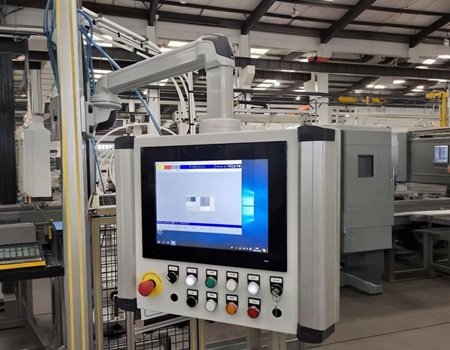
A support arm system brings the control panel and display to the operator, rather than forcing the operator to adapt to the machine. But with different load capacities, arm lengths, and mounting options available, choosing the right system can be challenging. This guide walks you through the key factors to consider.
Step 1: Determine the Load Capacity
The first step is to calculate the total weight of the control panel, display, and any other components that will be mounted on the arm. Then, match this weight to the appropriate load series.
Light-duty (up to 500 N): Suitable for small control panels and compact displays.
Medium-duty: Suitable for standard control panels and multi-component setups.
Heavy-duty: Suitable for large control panels and heavy equipment.
Important: Load capacity decreases as arm length increases. Always check the load diagram for your specific configuration
Step 2: Choose the Arm Length
Arm length (often referred to as "B" in technical drawings) determines the reach of the support arm. Consider:
Operator position: How far does the panel need to extend from the machine?
Working space: Is there enough clearance for the arm to move freely?
Load limit: Longer arms reduce load capacity, so balance reach with weight.
Standard arm lengths typically range from 500 mm to 2000 mm.
Step 3: Select the Mounting Type
Support arm systems can be mounted in different ways depending on your equipment and workspace:
Wall-mounted: Saves floor space, ideal for compact workstations.
Floor-mounted: Provides maximum stability for heavy panels.
Machine-mounted: Directly attached to the equipment for integrated operation.
Ceiling-mounted: Keeps the workspace clear, suitable for cleanrooms.
Confirm the mounting method before ordering to ensure compatibility.
Step 4: Consider Modularity and Accessories
A modular support arm system allows you to combine multiple arms, joints, and adapters to fit your specific layout. Look for:
Couplers to connect multiple arms
Adapters for different panel sizes
Cable management to keep wires organized
Brake or locking mechanisms for stable positioning
Modular systems can be expanded or adjusted later, making them a flexible long-term investment.
Step 5: Verify Ergonomics
The goal of a support arm system is to improve operator comfort and efficiency. Ensure the system allows:
Height adjustment for seated or standing operation
Tilt and swivel for optimal viewing angle
Smooth movement with minimal effort
A well-designed support arm reduces operator fatigue and improves productivity.
Choosing the right support arm system comes down to five key factors: load capacity, arm length, mounting type, modularity, and ergonomics. By evaluating each factor against your specific application, you can ensure a stable, efficient, and long-lasting workstation setup.
Need help selecting a support arm system? Contact JDF-FA for a customized consultation