Introduction
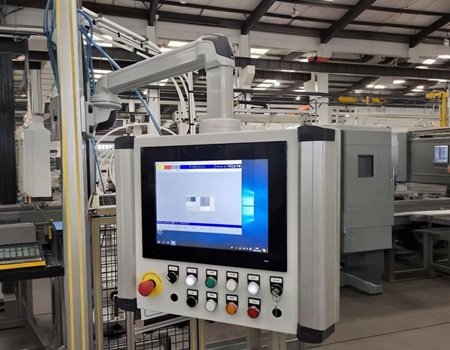
In modern industrial automation, the way operators interact with machinery is critical for efficiency and safety. A high-quality support arm system is more than just a bracket; it’s an ergonomic solution that positions your HMI (Human-Machine Interface) control box exactly where the operator needs it.
However, with various sizes, load capacities, and mounting options available, selecting the wrong system can lead to mechanical failure or poor usability. At JDF-FA, we’ve designed modular aluminum systems to solve these challenges. Here is a step-by-step guide to selecting the right HMI support arm system for your specific application.
1. Calculate the Total Load Capacity
The most crucial factor in selection is the weight of your control box and all installed electrical components.
The Rule of Thumb: Always calculate the maximum weight of the enclosure, including the HMI screen, PLCs, wiring, and push buttons.
Safety Factor: Never push the system to its absolute limit. We recommend applying a safety factor of 1.5x to 2x.
JDF Series Guide:
5065 Series: Light load (up to 500N / ~51kg) for compact panels.
6095 Series: Medium load (up to 1,000N / ~102kg) for standard CNC machines.
75110 Series: Heavy load (up to 1,500N / ~153kg) for large, multi-screen workstations.
2. Determine the Required Arm Length
The longer the arm, the lower the maximum load capacity (due to leverage). You must measure the distance from the machine’s mounting point to the operator's optimal viewing position.
Our systems offer customizable arm lengths (typically up to 2000mm). If you need a longer reach, you may need to step up to a heavier-duty series.
3. Choose the Correct Mounting Configuration
Where and how the arm attaches to the machine is vital.
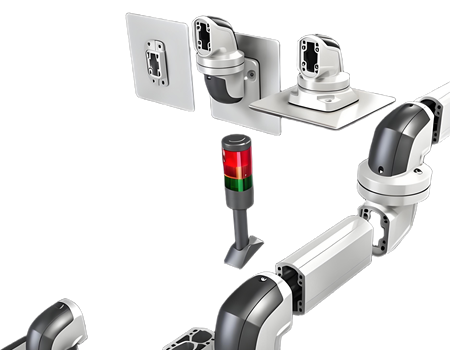
Wall/Horizontal Mount: Ideal for flat side surfaces.
Top Mount: Perfect for suspending the panel from overhead frames.
Base/Floor Mount: Used when the arm needs to stand vertically from a flat base.
4. Don't Forget Cable Management
A professional-looking workstation hides its cables. All JDF support arm systems feature an integrated hollow aluminum profile and edge protection. This not only keeps the workspace clean but also protects wires from mechanical damage and prevents accidental disconnections.
5. Smooth Adjustability
For operators who need to switch between sitting and standing positions, an articulated arm with adjustable joints (like our 90° angle modules) is essential. Ensure the locking mechanisms are robust enough to hold the panel firmly in place without drifting.
Conclusion
Choosing the right support arm system ensures your operators work comfortably and your equipment remains safe. By understanding your load requirements and mounting environments, you can build a flexible workstation tailored to your needs.
Need help selecting the perfect system? [Contact JDF-FA engineering team today] for 3D CAD drawings and professional advice!